Feb 14, 2008

Love, Hollywood-Style

It has long been said that love in Hollywood is but a celluloid reality: the fast pace and fickle nature of the celebrity-studded Dream Factory have never been considered an ideal environment for true and lasting romance to flourish. (With demanding bosses, studio politics, career competition, contract stipulations and on-location shooting, how could playactors of the past hold down a casual boyfriend, much less a husband and household?) So while it's true that perhaps most people never find sweet, lifelong, An-Affair-To-Remember sort of love, these Tinseltown twosomes have managed to evade the downfalls of fame and celebrate record numbers of anniversaries:


Cyd Charisse (1921-) and Tony Martin (1912- )
Married 59 years, 1948-present
Children: son Tony, Jr.

Perhaps MGM's most famous dancer next to superstud Gene Kelly is elegant, effervescent Cyd Charisse, the Texas-born ballerina who took a French stage name and traveled with the Ballet Russe before becoming hot property at her home studio in the 1940's. Terrifically talented, Cyd starred in some of the biggest musicals ever made - 1952's Singin' in the Rain, 1953's The Band Wagon, and the lush The Harvey Girls (1946), to name a few - and continually proved her popularity was owed more to substance than sequins (though her costumes were dazzling, to say the least).
Singer Tony Martin had less of an impact on the film world, though he's made his share of appearances in nearly three dozen feature films of the 1930's and 40's, such as Ziegfeld Girl and Till the Clouds Roll By. As a popular singer in the 1950's, his film contributions consisted mainly of soundtracks or cameo appearances.
Cyd and Tony currently live in Las Vegas, Nevada, and still frequent various celebrity functions and film retrospectives near their home.

____________

Hume Cronyn (1911-2003) and Jessica Tandy (1909-1994)
Married 52 years, 1942-1994 (her death)
Children: daughter Tandy and son Christopher

Serious stage actress Tandy should be remembered as the Blanche DuBois she created in the original theatre run of A Streetcar Named Desire, but her chance to immortalize her role on film was ruined with the casting of fellow stage star Vivien Leigh in the part. She continued to hone her theatre craft until experiencing a major resurgence in film popularity in her seventies; she won an Oscar for her performance as the titular character in 1989's Driving Miss Daisy.
Cronyn had his own modestly impressive movie resume, with minor parts in films like Ziegfeld Follies and The Postman Always Rings Twice. Younger generations will probably recognize the duo from their collaborations in 1980's films like Cocoon and batteries not included.
____________


Paul Newman (1925-) and Joanne Woodward (1930-)
Married 50 years, 1958-present
Children: daughters Elinor, Melissa and Claire

When Newman and Woodward were married in a hasty Las Vegas ceremony straight after wrapping their sizzling drama The Long Hot Summer in 1958, hardly anyone was surprised - their onscreen chemistry was, and still is, devastatingly electric. But three daughters, a dozen film collaborations and a sprawling philanthropical enterprise later, the tireless twosome are still forging a profound partnership with each new joint venture (last we checked, it was their work with their beloved Westport Country Playhouse) - and causing every jealous fan to wonder if Paul and Jo alone hold the copyright to married bliss.
____________


Ruth Gordon (1896-1985) and Garson Kanin (1912-1999)
Married 42 years, 1942-1985 (her death)
No Children

Perhaps Ruth Gordon isn't among the best-known of erstwhile actresses, but the feisty filly should be an A-Lister for the longevity of her contributions to classic cinema. First lauded on the stage, she eventually drew notice for her turn as Mary Todd in 1940's Abe Lincoln in Illinois. Shortly after, she married second husband Garson Kanin (her first husband died in 1927), and the couple gravitated towards the other glitterati of the stage and film world, collaborating and carousing with the likes of Katharine Hepburn and Spencer Tracy and Moss Hart and wife Kitty Carlisle Hart. Gordon and Kanin co-wrote several memorable film vehicles for the formidable Hepburn and Tracy, namely Pat and Mike and Adam's Rib, and separate from his wife, Kanin crafted comedies like My Favorite Wife and Bachelor Mother, both of which he also directed. Gordon experienced a resurgence in film popularity with her award-winning forays in Rosemary's Baby (1968) and the cult favorite Harold and Maude (1970).
_____________

Anne Bancroft (1931-2005) and Mel Brooks (1926-)
Married 41 years, 1964-2005 (her death)
Children: Son Max

Though the world will forever remember Anne Bancroft seductively draped in leopard and clutching a mixed drink, denizens of classic filmdom can recall myriad movies of the Italian beauty's resume that add dimension to her Graduate legacy, including her first foray into film, 1952's Don't Bother To Knock (alongside Marilyn Monroe and Richard Widmark, no less). Between this incendiary role and her 1962 Oscar win for The Miracle Worker were numerous B-movies that her screen presence elevated to worthwhile-viewing status, but she remained just out of the echelon of Big Box Office Success until the 1960's, when she met a persistent comedian named Mel Brooks. The two were married in 1964, and she proved to be a foil as well as a fan of her ambitious husband's, encouraging him to pursue the film concept that would eventually develop into The Producers, the 1968 hit that launched him into and set the standard for zany epic comedies to come. While Bancroft became more discerning in selecting movie work and lessened the number of roles she took on, Brooks continued to create his own outrageous brand of film, including Blazing Saddles, Young Frankenstein, and History of the World: Part I. Though Anne died of cancer in early 2005, Brooks is currently working with a musical version of his Frankenstein on Broadway.

"I'm married to a beautiful and talented woman who can lift your spirits just by looking at you." - Mel Brooks on Anne Bancroft

Blake Edwards (1922-) and Julie Andrews (1935-)
Married 38 years (1969-present)
Children: daughters Amy and Joanna

When one takes into consideration the amazing films churned out of Tinseltown in the 1960's, one has to ask: is there anything Blake Edwards didn't do? The jack-of-all-trades filmmaker created, wrote, scripted, and otherwise re-formatted some of the decade's biggest titles, a decadent slice of his resume wedged between television success in the 1950's (Edwards created, produced, and directed Peter Gunn and Mr. Lucky) and a series of fantastically popular satirical comedies, and inventive muscials in the 1970's and 80's. Breakfast at Tiffany's, The Pink Panther Series, the confection that is 1965's The Great Race - they're all owed to Edwards (well, that first one is truly Capote's and Hepburn's), along with frequent collaborator, conductor Henry Mancini. 1969 saw the mighty Edwards merge paths with another 60's icon, the inimitable import Julie Andrews, and for life, it seems - the two have been cheerful co-conspirators throughout their nearly four decades of marriage, with each still involved in film ventures. Andrews, plucked from the British stage practically in her Eliza Doolittle ensemble, experienced immense and immediate popularity in her film debut (she scored her biggest hits with back-to-back musicals in 1964 and 1965 with Mary Poppins and The Sound of Music), and enjoyed successes in later films that were tailor-made to showcase her considerable singing abilities - Edwards-crafted gems like Darling Lili (1970) and 1982's Victor/Victoria. The couple remain active in their respective careers and still attend celebrity functions near their home; Julie recently received the Lifetime Achievement Award from the Screen Actors Guild.

"There's nothing better than working on something you love with someone you love." - Blake Edwards on collaborating with Julie Andrews in Victor/Victoria
_____________

Vivien Leigh (1913-1967) and Sir Laurence Olivier (1907-1989)
Married 20 years, 1940-1960

Turbulent and tempestuous as their union may have been - Leigh suffered from bipolar disorder that showed itself several years into their marriage - the lasting ardor between classical actor Olivier and British-born Leigh reads like a scene from one of the couple's many stage and screen partnerships.
Olivier began his stage career opposite the likes of august Shakespearean great John Gielgud in 1935, and within two years, was sharing the spotlight with future wife Vivian Hartley, soon to be known as Vivien Leigh. Though each was married to another at the time, the two sparked an unmistakable onscreen rapport in 1937's Fire Over England; after separate stellar successes in the States - he in Wuthering Heights, she in the epic Gone With the Wind - they obtained divorces from their respective spouses and became one of Hollywood's handsomest and most popular husband-and-wife teams. Her devastating mental health issues proved a recurring strain on their marriage, though Olivier remained committed and frequently steered his wife's career on the occasions that her personal life proved unmanageable. The two did end their illustrious offscreen partnership in 1960; Leigh, unmarried thereafter, reportedly kept her former husband's framed photos throughout her house until her death of tuberculosis in 1967.

"Apart from her looks, which were magical...she also had something else: an attraction of the most perturbing nature I had ever encountered." Laurence Olivier on Vivien Leigh

____________

Humphrey Bogart (1899-1957) and Lauren Bacall (1924-)
Married 12 years, 1945-1957 (his death)
Children: Son Stephen and daughter Leslie

Perhaps the most iconic love story in Hollywood history is that of aged actor Humphrey Bogart and lithe, lovely Lauren Bacall. Grizzled, year-worn Bogart, in the midst of gaining his legendary trench-coat-and-tough-talk screen reputation, met naive newcomer Betty Perske on the set of the girl's first film, 1944's To Have and Have Not. The attraction was not instant, but Betty - renamed Lauren Bacall by her personal Svengali, director Howard Hawks - soon became enchanted with the kind, lonely Bogart, entrenched as he was in a quickly-dissolving marriage to his third wife Mayo Methot. The two began a secretive friendship on the set, and, after taking the appropriate steps to divorce himself from his alcoholic wife, Bogart forged a romance with Bacall that horrified her mother, scandalized Hawks, and delighted American audiences who rooted for the unlucky-in-love Bogie to find elusive happiness with the bright and brilliant 19-year-old, newly a sensation with the release of To Have and Have Not. The couple were wed in 1945.
After a decade of marriage and two children Bogart never thought he would get to father, the Bogarts satisfying home life was permanently marred when Humphrey was inadvertently diagnosed with cancer. Though he underwent radical treatments and artfully erected a stoic facade against the ravaging disease, his condition deteriorated quickly in 1956, and he died in early 1957. The gradual unhinging of this iconic man is a heart-wrenchingly sad process described by Bacall in her 1978 autobiography, By Myself, which is highly recommended to all fans of the duo.
What audiences so love about Bogie and Bacall is the way their unabashed attraction to, amusement with, and respect for each other is so readily read in each of the four films they starred in together. After three scathing, scarring failed marriages, film fave Bogart had found his ideal match in the quiet, contemplative New York girl who eschewed career pursuits and reigning social mores for married life with him. It was as if the sweet domesticity that their film relationships lacked was made up for in their very home; even Howard Hawks, resentful or not at his protegee's flight, couldn't have directed a better love story.
That, after all, is Hollywood magic.

"They never wrote a romance the way we lived it." - Lauren Bacall on late husband Humphrey Bogart

__________

Was your favorite classic celebrity couple profiled above? If not, who are they?

Labels: , , , , , , ,

Aug 23, 2007

Gene Kelly, 1912-1996

In writing of my favorite films and the stars that populate them, I can't help but feel I've covered every aspect of uber-hot hoofer Gene Kelly before: the tough-nosed professional man behind the debonair onscreen romantic, the painstaking perfection he infused into each of his films, the vibrancy with which his colorful MGM spectacles still resonate today (and oh, did I mention that smile?). But as I celebrate what would've been Gene-o's 95th birthday today, I wonder if it isn't so much simpler on some level. Could Gene Kelly really be just a fabulous movie star?

Devastatingly handsome and supremely sensual, Kelly proved adept at playing his non-dancing roles pitch-perfectly: he was, in equal turns, Judy Garland's overzealous and histrionic lover in The Pirate, the despondent film star on the edge of decline in the insurmountably superb Singin' in the Rain, and the hardworn, Hopper-esque journalist in Stanley Kramer's dramatic Inherit the Wind. Watching his films decades after their respective releases, it seems that Kelly understood, even from the outset of his career in 1941, the great beauty of cinema, the legacy of the motion pictures he was creating. And so he worked to raise the medium to a higher standard regarding its inclusion of dance and its depiction of aesthetic beauty, moreso than any of his contemporaries: he often harangued scriptwriters and challenged directors, re-wrote dialogue and cast his own leading ladies in order to fashion the caliber of film he knew that he, and MGM, was capable of. What a legacy that leaves us to revel in.

So Gene, here's to you. Sexy, savvy, graceful and ingenius...Really. Our love is here to stay.

Not familiar with Gene? Check out my film suggestions to get acquainted with Monsieur Kelly here.

Labels: , , ,

Jun 14, 2007

Keen on Gene

I think I'm obsessed with Gene Tierney.
It happens every so often in my quest to find the most enchanting gems of classic cinema, whether I'm voraciously devouring an autobiography, sacrificing precious sleep to catch a late movie on TCM, or finding myself in the throes of conversation with any random passerby who happens to comment on my vintage slingbacks or Kate-Hepburn-inspired-hairdo: I stumble upon an actor, a director, or a film so incredible that it's a wonder I've lived a good twenty years without yet being enlightened as to its awesomeness. First it was director Blake Edwards and his slew of films that span genres and decades; then, I fell hard for Henry Fonda and the honest, compassionate, soft-spoken characters he's portrayed since the 1930s (the beautiful blue eyes may've played a part in my affection, too). Most recently it was the divine Barbara Stanwyck and her wise-cracking, no-nonsense persona, onscreen and off - Sugarpuss O'Shea, I salute you - and now, Gene.

Sweet, stoic and stunningly unfettered by her status as a Hollywood star, Gene Tierney entered the echelon of movie history in 1944's Laura, in which she plays the titular character of a glamorous society murder-victim-cum-murder-suspect. It was just her twelfth film since her 1940 debut, and Gene was doubtful of her true thespian talent, though she worked tirelessly to improve her skill. (She would often study great films that had preceded her generation so late into the night that the studio projectionist would fall asleep screening them.)

Despite her incredible beauty - she stands out even amongst her glittery starlet contemporaries like Rita Hayworth and Lana Turner - Gene was offered, and preferred, mainly dramatic roles that challenged her abilities, instead of the standard musicals or unsophisticated sex comedies assigned to Fox's younger leading ladies of the 1940s. Films like Tobacco Road, Leave Her To Heaven and The Ghost and Mrs. Muir are dark, humorless pieces that are illuminated as much by their overall impactfulness as by Gene's deft performances, and because she was neither influenced by nor dependent upon her movie career to support her financially, she had the advantage of employing discretion in the parts she selected.

Gene's film career had already lost precedence to her family life after an unsuccessful marriage to designer Oleg Cassini ended in divorce in the early 1950's, and her health soon became tabloid fodder as she surrendered to a curious and debilitating mental illness that required aggressive measures, extensive psychotherapy, and prolonged stays in various American institutions before it was nearly eradicated from her life and she was able to regain stability. Upon her tentative return to Hollywood in the 1960's, minor cameo roles were nearly all that were offered Gene, now in her 40's - and the newly-remarried mother of two accepted this fact readily, again focusing on her family and home life for the remainder of her life.


Leaving behind an impressive film legacy and a truly touching and effective autobiography, Self-Portrait, Gene Tierney died in November of 1991, just shy of her 81st birthday.

Labels: ,

May 20, 2007

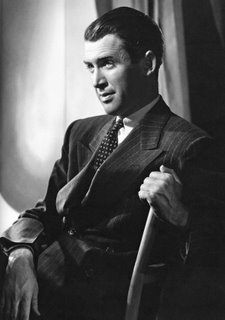
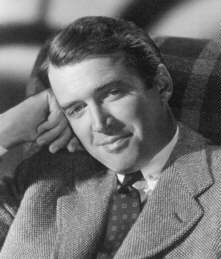
Happy Birthday, James

Strange, isn't it? Each man's life touches so many other lives. When he isn't around he leaves an awful hole, doesn't he?

James Maitland Stewart (1908-1997)

I certainly don't remember the day Jimmy Stewart was born, but I do know where I was the moment I heard he had passed away - I was newly twelve and had just tasted what I found to be the most incredibly romantic film in the world, Capra's essential It's A Wonderful Life. Every facet of the movie appealed to my preteen ideals: the tender and hesitant romance, the resounding moral to be gleaned from George Bailey's struggle and his ultimate revelation from God (via Clarence, of course), and the inherent loyalty and desperate need for independence weighing down the young protaganist. It was the kind of movie that makes one ache with gratefulness and that inspires a renewed sense of purpose, and I was just beginning to understand how powerful cinema can be. I owe much of that discovery to Jimmy Stewart.
Whether he is wooing Hedy Lamarr with memorized poetry as night falls in a quiet country house (1941's Come Live With Me is an utterly sweet confection of a movie), drinking champagne and skinny-dipping with Kath Hepburn in The Philadelphia Story, or avenging his son's death in films like the Civil War-themed Shenendoah, Jimmy is an unforgettable presence on the silver screen. He worked opposite the best and brightest of Hollywood; he shone under the direction of masters like Capra, Hitchcock, and John Ford; he was close lifelong friends with fellow star Henry Fonda; his film career spans an incredible five decades. Yes, James Stewart is one of the greats.
He inarguably appeals to every person in one character or another; he is somehow Everyman and yet each distinct character he portrays, simultaneously. Vertigo, Mr. Smith Goes to Washington, Rear Window, Winchester 73, Shop Around the Corner, The Man Who Shot Liberty Valance...there will never be another Jimmy Stewart.
So thank you, Jimmy, for your luminous career, for your enduring star persona, for all you've given us movie lovers to moon and dream over for decades and decades. Your inherent sweetness will no doubt never cease to charm us, and your stoic, dramatic side will allow your darker films to remain classics even as time renders their contemporaries inconsequential.

You know, Clarence was right all along. When a man isn't around he leaves an awful hole, doesn't he?

Labels: , ,

May 12, 2007

A Century of Eccentricity

They call her Kate the Great, and with good reason. She's played a fierce lawyer and a con man, a hard-hitting reporter and a heartbroken widow, a battle-embroiled queen and a barefoot mountain girl. She's come to us as an East Coast socialite (many, actually - usually rich, lacking pretentions), a minister's daughter of the Old West, a concerned California mother and a Chinese peasant in the throes of oppression. She wore slacks and loafers in an age of platinum-blonde sexpots in slinky gowns, she balked at the Hollywood code of behavior, refused interviews and hid from the press, and, for over six decades, she remained a mainstay of then-contemporary cinema despite the fall of the studio area and the ushering in of innumerable new genres of movies. I'd say Kate the Great may be just the moniker for inimitable screen queen Katharine Hepburn, who, were she living, would be 100 years old today.

Katharine Houghton Hepburn hailed from Hartford, Connecticut, where she was born in 1907 to liberal and well-educated parents. The elder Hepburns' high-minded social ambitions, namely to educate society on such delicate and unmentionable issues as personal hygiene and birth control, combined with her mother's vocal discontent at being an educated woman relegated to merely running a household, contributed to the general air of eccentricism, self-assurance, and gender-blind aspirations in which Kate was raised and with which she later pursued her acting career. After obtaining a degree at Bryn Mawr, Kate heeded her mother's advice, eschewing the typical life assigned to women of the day: that of wife and mother, playing "nursemaid to the upcoming generation" as Hep herself called it, and instead, she set out determined to find her worth as a person, unrelative to her status as a female in what was then largely a man's world.

Through what she considers a lucky break, Hepburn was noticed by talent scouts while performing a role on Broadway and, within the same year of 1932, found herself starring opposite John Barrymore in the film Bill of Divorcement. It didn't know it then, but Hollywood would never quite recover from the arrival of the enigmatic starlet, though her icon-status would be years in the making.

Despite a rocky period of film failures in the 1930s which caused studio heads to deem her "Box Office Poison", Hepburn's popularity with filmgoers and movie moguls alike was essentially cemented with her performance in both the stage and screen versions of The Philadelphia Story (1940), in which she starred opposite fellow screen icons Cary Grant and Jimmy Stewart and a host of superb supporting players. 1942 marked Hep's first pairing with the inimitable Spencer Tracy, whom she quickly developed a deep affection for and friendship with during the production of Woman of The Year; their mutual respect and attraction is evident in the film even today and, while not as incendiary as most romances of the era tend to be, theirs is an incredibly warm and affectionate romance to witness as it unfolds onscreen. The couple's real-life relationship lasted until Tracy's death in 1967, just days after the two finished work on another distinguished gem in their career, Stanley Kramer's Guess Who's Coming To Dinner?.

She earned an astonishing twelve Academy Award nominations in her career and took home the statue an unprecedented four times, although, disinterested in the politics of the Oscar-giving process, Hepburn was never actually present to accept her awards (and the fourth, earned in 1982, she gave to an ailing friend to spur on his recovery). In her later years, Kate focused on spending time with her extended family in their Connecticut summer home, keeping a relatively active schedule, reading and responding to fan mail and conversing with historians and authors like A. Scott Berg, who published a book of his experiences with the actress after her 2003 death at age 96.

Whether she is putting her way to golf superstardom or taming leopards with song, battling court cases or scrambling to make breakfast for screen hubby Spencer, Katharine Hepburn remains an unforgettable face, an inimitable voice, a deft professional touch in some of classic cinema's most revered scenes and stories. Kate the Great, indeed...and one hundred years of her screen magic for posterity to delight in make her all the greater.


""I always wanted to be a movie actress. I thought it was very romantic. And it was."

Katharine Hepburn
1907-2003

Labels: , ,

Apr 20, 2007

Kitty Carlisle Hart, 1910-2007

As a girl who emulates that vanishing social set comprised of the talented, elegant women of yesteryear, I was truly saddened to hear that just months after touring the United States with her one-woman show, sassy singer, actress, socialite, philanthropist, lecturer, television personality, and Broadway star Kitty Carlisle Hart died this week at her Manhattan, NY home. She was 96 years old.

Perhaps best known for her long-running presence on popular game shows of the 1950s and 60s (she appeared as a favorite panelist on TV's "To Tell The Truth" for a span of more than forty years), Carlisle was born Catherine Conn in New Orleans on September 3, 1910. After her father died in 1920, Catherine and her mother took to Europe, where Mrs. Conn hoped to marry her daughter into royalty after she had been suitably educated. While intentions of noble nuptials never materialized, young Kitty finished her formal education in Switzerland, France's Sorbonne, and the London School of Economics; she also studied acting at London's Royal Academy of Dramatic Art.

Returning to the United States at age 21, Carlisle soon took to the musical stage, premiering in the titular role of "Rio Rita" before embarking on a brief tenure in Hollywood. She made only four films during her ingenue period in the 1930's; perhaps most notable is her role in 1934's zany Marx Brothers classic, A Night at the Opera. Feeling films were not her fortitude, she returned to the theatre and continued performing sporadically through the 1970's, mostly musicals and occasionally drama, even making numerous noted and successful forays into opera (she premiered in Die Fledermaus in 1967).

Carlisle married prominent Pullitzer prize-winning playwright Moss Hart in 1946 - her only marriage - and remained devoted to him and to their two children after his 1961 death at age 57, never remarrying, despite the fact that she outlived him by nearly fifty years. Colorful accounts of the couple's glitzy social life, rife with renowned talents from the arts and New York's elite uppercrust society, remained a mainstay of Carlisle's personal appearances in theatres and nightclubs for the rest of her life.


Carlisle
remained a foremost supporter and advocate of the arts in the years following Hart's death, most notably chairing the New York State Council of the Arts for over 25 years, where she worked to expand the council's budget by an estimated $50 million. She was still actively fundraising into her 90's.

The few in today's audiences who are privileged enough to be familiar with Kitty Carlisle Hart won't be surprised to learn that she continued her one-woman cabaret act until late 2006, even celebrating her 96th birthday with a performance at New York's Regency Hotel. Pretty, genuine, unpretentious, and endlessly enthusiastic about the perpetuation of memories of Hollywood's Golden Age, she created a name for herself by trying her talents in a multitude of mediums and endeared herself to New Yorkers with her dedicated efforts to enrich the art and culture of their legendary city. To tell the truth, a lady like this will never be forgotten.


Ms. Hart is survived by her two children with Moss Hart: son Christopher Hart and daughter Cathy Hart Stoeckle.


For more information on Kitty Carlisle Hart, I highly recommend reading Kitty: An Autobiography, which she published in 1988: it's an engrossing read that fully employs Kitty's wit and intelligence, detailing her youth, her romantic forays in Europe, her decades-spanning and multifarious career, her family life with Moss Hart, and the considerable strides she made as an independent woman in her later years. It's quite a book based on quite a life.

KittyCarlisle.com

Kitty: An Autobiography

Complicated Women (TV Documentary)

Vintage Episode of To Tell The Truth - Courtesy of YouTube (external link)

Labels: , ,

Apr 1, 2007

The Birthday Girl


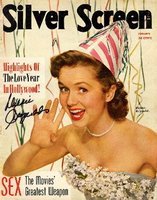
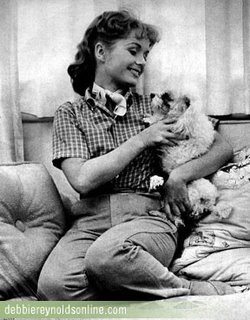
Joyeux Anniversaire, Debbie Reynolds! The divine Miss D turns 75 today. Here she celebrating in style, left, and in a still from one of my fave movies, The Mating Game, snuggling some sort of ewok-like dog, below.

Fast facts on Debbie:

- She was born Mary Frances Reynolds in El Paso, Texas, April 1, 1932.

- As the best pitcher on her neighborhood's sandlot baseball team, she intended to pursue a degree in education and work as a gym teacher.

- At 16, Debbie entered the Miss Burbank Contest near her California home - her family had relocated when she was just eight years old - simply to get the free silk scarf and blouse and the complimentary lunch offered with entrance. To her and everyone else's suprise, she took home the crown.

- It was talent executive William Orr who changed her moniker from Frannie to Debbie, coining it after the daughter of friends; studio head Jack Warner also challenged her to change her last name to Morgan, which Debbie steadfastly refused to do.

- Did only two films under her Warner Bros. contract between 1948 and 1950; MGM snatched her up and plopped her into 1950's Two Weeks With Love with Jane Powell and Ricardo Montalban. Still planning to go to college, Debbie thought of her movie career as a great means of income for her tuition expenses - until she made six films in three years at MGM, including 1952's blockbuster Singin' in the Rain.

- Sometimes sent as many as 300 letters per week to soldiers serving in war-torn Korea and other southeast countries she had visited during her USO tours in the early '50's.

- Seriously dated actor Robert Wagner, two years her senior, in the early 1950's before meeting future husband Eddie Fisher. In her book, Debbie: My Life, Reynolds expresses regret that her relationship with Wagner did not culminate in marriage.

- Survived three marriages, one to somewhat-celeb Eddie Fisher, with whom she had children Carrie Fisher and Todd Fisher.

- Is an avid collector of film memorabilia, including costumes and posters, often asking celebrity friends and colleagues to autograph. A museum showcasing her collection is rumored to open in late 2006/07.

- Still tours the country as a singer and stage performer, most frequently appearing in the California/Nevada area.

- Debbie Reynolds is awesome.


"Singin' in the Rain and childbirth were the two hardest things I ever had to do in my life." - DR


NOTE: This post was renewed from last year's birthday tribute to Debbie - it's been a hectic week, and I haven't had the time to create a new post that will do this great lady justice! In the twelve months since I've posted this, though, I've had the pleasure of meeting Debbie in person and attending two of her shows, so I hope to incorporate all of that awesomeness into an upcoming belated birthday tribute - stay tuned!

Labels: ,

Feb 8, 2007

Magic Time

Eternally-beloved actor Jack Lemmon, perennial favorite of legendary directors like Billy Wilder and Blake Edwards, would have celebrated his 82rd birthday today, were he still living. The venerable actor passed away in 2001 at the age of 76.

Lemmon first captivated me in 1960's The Apartment as the sweet, idealistic C.C. Baxter, the office minion who displaces his own priorities to please others, at least until he meets pretty elevator girl Shirley MacLaine. Lemmon's performance here - as it was in every subsequent film of his I've seen - is ineffably touching but inarguably effective, a rare mix of likeability, "Everyman" appeal, visible vulnerability and true talent. He was skilled at comedy, especially when bouncing wisecracks off of lifelong on- and off-screen buddy Walter Matthau, but Jack's film legacy will always be bound to the dramatic roles he portrayed with heartbreaking sincerity, in movies like 1963's Days of Wine and Roses and 1986's portrait of a midlife-crisis, That's Life.

Open to the constantly-narrowing opportunities for an older actor, Lemmon was still working throughout the 1990s, with a major motion picture and several made-for-television dramas airing in the years just before his 2001 passing. His life and career are chronicled, albeit very subjectively, in the book A Twist of Lemmon: A Tribute to my Father by his son Chris, but for a more balanced yet still respectful account of the day-to-day Jack, I recommend Peter Bogdanovich's Who The Hell's In It?, which devotes a chapter to describing time the author spent with Lemmon in California some forty years ago.

From his role as feisty, palm-throwing Ensign Pulver in the sea-bound classic Mister Roberts all the way to his crotchety, frustrated 'old man' roles in Grumpy Old Men and Out to Sea, Jack Lemmon is a timeless talent, appealing to the heart of his audience as much as their mind, a star who's discovered by each new generation that delves into the genre that is classic cinema. And with a legacy like that, it will always be Magic Time.


Discussion Junction: We know he can do the drama...but what's your favorite Jack Lemmon comedy? Post below!

Labels: , ,

Feb 3, 2007

Deborah Kerr - Rhymes with "Star"

Scottish-born Kerr's name may not actually rhyme with star, but in creating this cute couplet for her first U.S. film in 1947, MGM's crafty promotions department touched on something that legions of film fans have acknowledged in the years since then: while vastly underappreciated as a dramatic actress, the British beauty* is very much one of Tinseltown's twinkliest.

Having said that, it doesn't really take too much for me to like a star. Wittiness, sophistication, sex appeal, the perfect shade of lipstick - all traits that, once an actor's talent has been established, I tend to focus on, wondering how I can employ them in my rather dull college-girl lifestyle and add that ineffable Hollywood allure to my own list of desirable traits. After watching 1957's weepy drama An Affair To Remember this week, I was simply enchanted with regal redhead Deborah Kerr who, with her rosy beauty and genteel demeanor, is definitely one to admire.

Scottish-born Deborah Jane Kerr
was raised and educated in England during the 1920s and '30s, and after discovering an outlet for her passions in acting, the shy teenager was given an opportunity to play 'legitimate theatre' by her aunt, a radio celebrity. After being noticed by producer/director Gabriel Pascal and winning a small but notable role in his 1941 film Major Barbara (she recited The Lord's Prayer at her audition), she quickly became a star in Britain. Hollywood had yet to take note of her, but Deborah's role in the gripping drama Black Narcissus (1947) got their attention, and she was soon under contract at MGM.

Aside from few notable anachronistic parts - her lusty, seaside From Here To Eternity turn in the surf with Burt Lancaster being the most profound and the most iconic - Kerr was consistently cast as women she later called "high-minded, long suffering, white-gloved and decorative", such as parts in The End of The Affair (1955) and my personal favorite, An Affair To Remember. Her propriety and elegance, attributed as much to her upbringing as to the strictness of an insistent Victorian grandmother, were often called on more than her dramatic ability, though her deft combination of these elements and her skill garnered her six Oscar nominations in twelve years. (She was eventually awarded an honorary statuette in 1994).

Kerr quit movies in 1968 after divorcing first husband Anthony Bartley, father of her two daughters, and settling into marriage to director Peter Viertel, to whom she remains married today. She lives in Switzerland, but Parkinson's disease has rendered her incapable of publicly sharing her Hollywood history or granting fan requests for autographs. Her stunning celluloid legacy is still accessible, though, and she is as powerful a screen presence as she was sixty years ago. I recommend you pour yourself a pink champagne and get to know Deborah Kerr...she rhymes with "star" for a reason.


*I know Kerr's not British, but she played long-suffering English ladies in so many of her best-known roles...

Labels: ,

Aug 3, 2006

Dee Day

A model at twelve, an actress at fifteen, and a superstar at an age when most girls would have been thrilled to graduate high school: Sandra Dee seemed to have it all. After her popularity exploded in 1959 with teen classics Gidget and A Summer's Place, she married singing sensation Bobby Darin, her brassy, boorish co-star on 1961's Come September, at just eighteen - he claimed that the angered reactions his teasing produced were better than no reaction at all - and a year later, the couple welcomed their only child, son Dodd. But as the sixties wore on, offers for work waned and tensions arose at home; by 1967, both her career and her marriage were over. It seems she had barely been initiated into the halls of Tinseltown before she was crowned Queen of Teens and, soon after, Sandra Dee slipped gracefully away to retire in the annals of Hollywood history.

Despite the fact that her career spanned nearly thirty years, Dee appeared in but twenty-three films, lending her talents to an additional dozen television movies and guest appearances in the 1970's and 80's. Though most recall her as the sexually-stifled teenager in the weepy (but very dated) A Summer's Place, Dee shines in light comedies like Take Her, She's Mine opposite Jimmy Stewart and plays solidly in heavier fare - her performance in 1959's Imitation of Life shows impressive range for a seventeen-year-old. In terms of my childhood, she is warmly remembered as boy-crazy, surf-happy Gidget, before Sally Field's spunk re-ignited the Gidge character on television nearly a decade later, and as a young woman I relish her in roles opposite her real-life husband (Come September is definitely a giddy, guilty pleasure). Dee worked sporadically after wrapping her final films in the late 1960's, choosing instead to tend to her young son, particularly after ex-husband Darin died suddenly in 1973. Aside from two tiny television appearances in the 1990's, Dee, who never remarried, lived outside of the limelight for the second half of her life; she died of kidney disease in February of 2005.

For a woman whose career seems barely a whisper in the shadow of such legends as Greta Garbo and Bette Davis, it seems unthinkable that young Sandra Dee created a sensation and earned a legion of devoted fans with her wholesome beauty and scandal-free public life. Today, though, she remains a star, and, come September, she'll still have her place in the cinema firmament.


Check out the Sandra Dee Fans website for beautiful photographs, vintage magazine articles, and wonderful fan tributes to the incomparable Miss Dee.

Labels: ,

Jul 10, 2006

A New Star in the Heavens

Beloved television and screen actress and radio personality June Allyson died this weekend after a long illness in her Ojai, California, residence. The fresh-faced star, perhaps best known for her roles in lively musicals of the 1940's, was 88.

June was born Ella Geisman on October 7, 1917, and was raised in considerable poverty in her Bronx neighborhood by her divorced mother. A debilitating accident at age 8 left doctors doubting her future mobility, but as she neared adolescence (and after four years in the confinement of a steel brace), young Ella taught herself to dance under the impressive tutelage of Fred Astaire and Ginger Rogers' The Gay Divorcee. As a teenager she auditioned for a Broadway musical on a dare, won the role, and continued to appear as a chorus girl throughout her high school career. She intended to study medicine and become a doctor, but until then, Geisman saw her stage success merely as ideal financing for her college aspirations. When she was scooped up by MGM for not only a screen version of her Broadway role in Best Foot Forward (1943) but a long-term contract with the studio as well, her future was drastically changed.


June Allyson was the refreshingly girl-next-door face in an era of screen sirens, a petite powerhouse of talent and pizazz amidst the sultry dramatic actresses of the day. If contemporaries like Lauren Bacall, Ava Gardner, and Barbara Stanwyck sizzled, then June Allyson sparkled and shone alongside the top male stars of her day: Jimmy Stewart, Peter Lawford, and Van Johnson, to name a few. Her role as rebellious softheart Jo March in the 1949 version of Little Women is not only one of my favorite of Allyson's performances, but one of the most faithful book-to-film transferences of a character and among the most heartbreakingly-endearing characters in classic cinema.

Rather than fading into obscurity or distancing herself from her illustrious and long-spanning Hollywood career, Allyson embraced her past in recent years, proving an invaluable resource in the preservation of information related to MGM's Golden Years. She also raised funds in memory of friends and former co-stars, helping to create museums in honor of Judy Garland and James Stewart in the 1990's.


May June find peace and know that she is remembered not only for her incredible film legacy, but for her enduring kindness and the darling image that she truly lived up to.


Photos courtesy of The Official June Allyson Website, which I encourage you to visit for a more detailed look at a legend via fabulous photo galleries, a detailed biography and wonderful interviews with Allyson
herself.

Labels: , ,

May 16, 2006

Happy Birthday, Handsome

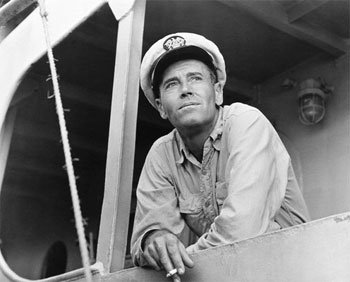
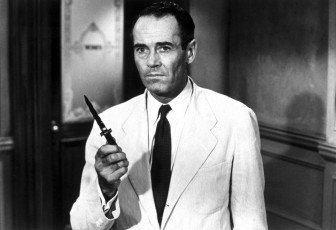
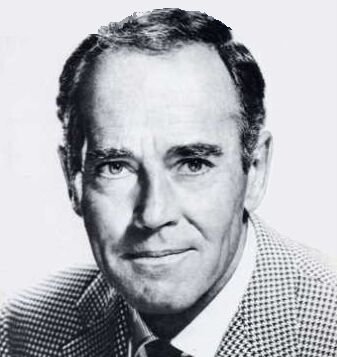
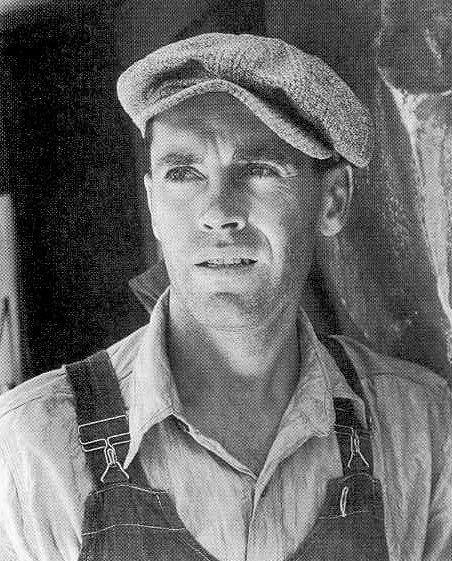
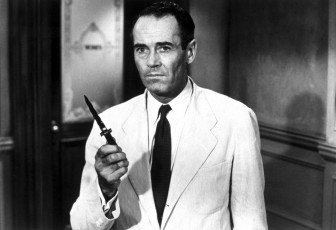
Today marks what would've been the 101st birthday of All-American actor Henry Fonda, whose unforgettable roles in films like The Grapes of Wrath have forever emblazoned his as an easily-identifiable face of integrity and honesty in American culture. I have harbored a completely understandable crush on Hank since watching 12 Angry Men last fall (and Jezebel, and Fort Apache, and Mister Roberts, and Yours, Mine and Ours, and Sex and the Single Girl...). Okay, yeah, I admit it. I adore One-Take Fonda.

If you missed tuning in to TCM's half-hearted birthday tribute to Fonda this morning, then I suggest renting any of the aforementioned films along with such classics as The Ox-Bow Incident, Young Mr. Lincoln, and On Golden Pond. In honor of my paramour's 101st, I myself plan to lie poolside and skim through Fonda: My Life once again, watch Jezebel for the second time this week, and spend the money I've allocated for a security deposit on the Criterion Collection edition of The Lady Eve instead. Ahhh, summer.


Interestingly enough, Fonda's first wife, actress Margaret Sullavan, was also born on this day; she died in 1960 at the age of only 48.


"He moved me always, this reserved man. There was a reason he was a star." - Sidney Lumet on Henry Fonda


Labels: , ,

May 6, 2006

I run a couple of newspapers. What do you do?

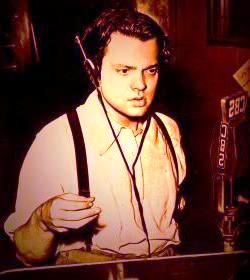
Orson Welles, to whom I was first (poorly) introduced in Martin Ritt's steamy 1958 drama The Long Hot Summer, would have been 96 today. The worldly Wisconsinite's incredible vision and ability, both on and offscreen, has become more and more evident as I've ventured to watch such films as the groundbreaking Citizen Kane - most definitely an essential facet of his varied career - as well as The Third Man and the brilliant A Touch of Evil. Here's a bit of inside scoop:

George Orson Welles, an only child, was born in Kenosha, WI, in 1915, and suffered the losses of both parents by the time he was a teenager.

The number of children he fathered is disputed, as his marriage to first wife Virginia Nicholson is not well-documented, but the biographies I referenced list three daughters, one with each of his wives: Christopher (b. 1938) with Nicholson, Rebecca (b. 1944) with Rita Hayworth, and Beatrice (b. 1955), with Paola Mori.

While rushing from live broadcast to live broadcast at various New York City radio stations in the late 1930's, Welles was often late due to the heavy traffic - so he utilized a loophole in city code that allowed for those who were not sick to hail ambulances. For the remainder of his obligations in New York, he rode from studio to studio in a wailing ambulance, and his punctuality was rarely an issue.

The controversial and landmark Citizen Kane was nominated for eight Academy Awards, including Best Writing/Original Screenplay (which it won), Best Picture, and Best Actor and Best Director (both Welles).

Welles has assumed the responsibilities of actor, writer, director, producer, editor, production designer, art director, and cinematographer throughout his career, in addition to his extensive radio work.

Welles died of a heart attack in 1985.


Whether he was behind the camera, before it, or nowhere near it - whether he was outraged pappy Will Vahnuh or boyishly charming young Charles Foster Kane - when he was inciting mass panic with a sizzling reading of H.G. Wells' sci-fi drama -Orson Welles was an extraordinary talent that should be remembered, for both the contributions he made to film and media, and for the paths he paved for great minds that came after him.


For more Orsonian indulgences:

Here you can locate and listen to several of Welles' radio programs, including the infamous
War of the Worlds broadcast from 1938.

Turner Classic Movies hosts an afternoon of Welles' films on Monday, May 16, inlcuding Citizen Kane, Journey Into Fear, and A Touch of Evil. Follow the link for showtimes and details, or click here to see a monthlong schedule of his films on television.

Visit Amazon.com's extensive list of Orson Welles books, DVDs and videos to add to your collection.

Labels: , ,

May 2, 2006

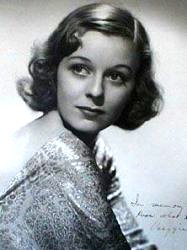
The Engaging Miss Margaret

"There might be a lot we don't know about each other. You know, people seldom go to the trouble of scratching the surface of things to find the inner truth."


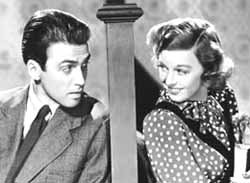
As Jimmy Stewart's character says in Ernst Lubitsch's achingly-good Shop Around the Corner, people seldom go to the trouble of finding out more about those they encounter everyday. I've seen this particular scene in the film several times, never failing to catch it in a rare airing on TCM - and it never fails to be as moving with each successive viewing. When I watched it most recently, though, it was the young woman Jimmy's character was speaking to that caught my attention more than his words: the beautiful, husky-voiced Margaret Sullavan.


I was first introduced to Sullavan in 1940's Shop, read about her brief, stormy 1931 marriage to Henry Fonda in his autobiography (it was both his first nuptuals and hers), and marvelled at those big, pensive eyes while watching her play opposite Stewart in 1938's The Shopworn Angel just yesterday. Her fragility and stubborness seem almost too innate to be completely effaced from the women she plays, and so whether she is a haughty young shopgirl, a glamorous society woman, or an ordinary lady with extraordinary expectations, there is an unmistakable amalgam of vulnerability and obstinance that I have yet to see so exemplified by any other actress of her time.

Sullavan made only seventeen movies in her career, yet to me, she is a standout performer whose personal pain and neediness translate all too well to her characters on the big screen. After her marriage to Fonda dissolved in 1932, she had a lurid affair with Broadway director Jed Harris, then leapt into the real-life role of director William Wyler's wife to avoid furthering her relationship with Harris. It wasn't until she married agent-producer Leland Hayward (who happened to be Fonda's agent and close personal friend) in 1936 that she settled into a more stable lifestyle; the couple had three children before divorcing in 1947: Brooke, Bridget, and Bill. Venturing away from film and back to her first love, the stage, Sullavan once again drew crowds with her solid, enchanting acting in the 1950s. As her theatrical career began to sour and her family life began to collapse, though, she inevitably battled substance abuse issues; her death of barbituate overdose in 1960 was ruled an accident.

Margaret Sullavan had such an impact on me as impetuous shopgirl Klara Novak in Shop Around the Corner that I can never discount her when thinking of my favorite actors to ever grace the silver screen: she's full of nearly-impossible ideals and dreaming far beyond the boundaries of her humdrum young city life, her natural vibrancy and her enthusiasm for her secret romance barely subdued by the seriousness of her work environment and the bland duties she must attend to. I only wish that watching her - Margaret, Klara, any number of the women she became - I only wish could admire those rueful eyes without knowing the reality of this versatile and boundless actress's unrealized potential and too-short life.

Don't miss The Shopworn Angel on TCM Saturday, May 27.

Labels: ,

Apr 13, 2006

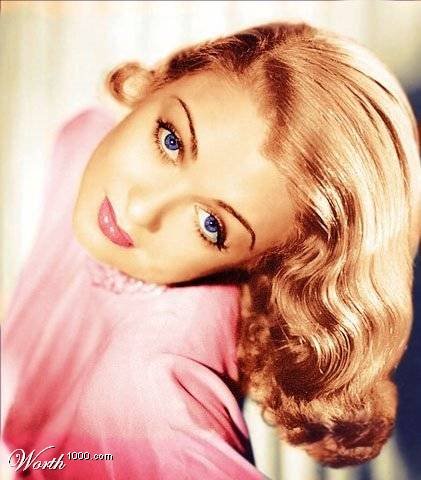
Constance Bennett is beautiful!

After the unintentional screening of a Cary Grant/Roland Young double feature at my apartment last night - we started off with The Philadelphia Story and wrapped things up with Topper - I decided that I needed to know more about the fiery blonde apparition who played opposite endlessly-mischievous Cary Grant in our second film, Constance Bennett. Constance, the elder sister of Barbara and Joan Bennett, of the famous Bennett sisters, turns out to be one more fascinating lady of the big screen, so I'll share some tidbits about this beautiful blonde:

- She was born October 22, 1904 in New York, NY
- She eloped at age 16 and made her screen debut in Reckless Youth at age 17. The marriage was soon annulled.
- She was married five times in her life and has three children: an adopted son, and two daughters with husband Gil Roland.
- In the 1930's, she negotiated with studio head Jack Warner to not only pay her extremely high salary, but also her agents' fees and income taxes.
- Constance's most memorable performances include Common Clay (1930), The Common Law (1931), and What Price Hollywood (1932), an early version of A Star Is Born. Her considerable comedic skill is showcased in such films as Ladies in Love (1936) and Topper (1937), where she plays the charmingly carefree socialite Marion Kirby - both before and after Marion's death.
- She was an excellent poker player and often, the only woman invited to play in Hollywood circles.
- She died suddenly of a cerebral hemorrhage in 1965; she was 59 years old.
- Is buried in Arlington National Cemetery due to her marriage to a U.S. Air Force colonel, and to her skilled coordination of flying shows to U.S. troops stationed abroad from 1946-48.


"That beautiful sister of mine was an overwhelming and volatile mixture. One had the feeling that she'd been shot from a canon and showered her sparks over an incredulous world with no thought or care where they fell...She was like some silvery comet who streaked through life with daring speed, the wellspring of which was an inner confidence that I deeply admired." - sister Joan Bennett on Constance

"I'm a lot more sartorial than thespian. They come to see me and go out humming the costumes." - Constance Bennett

Labels: